Swoock catalogue · 001 · early access
Animal Crossfire
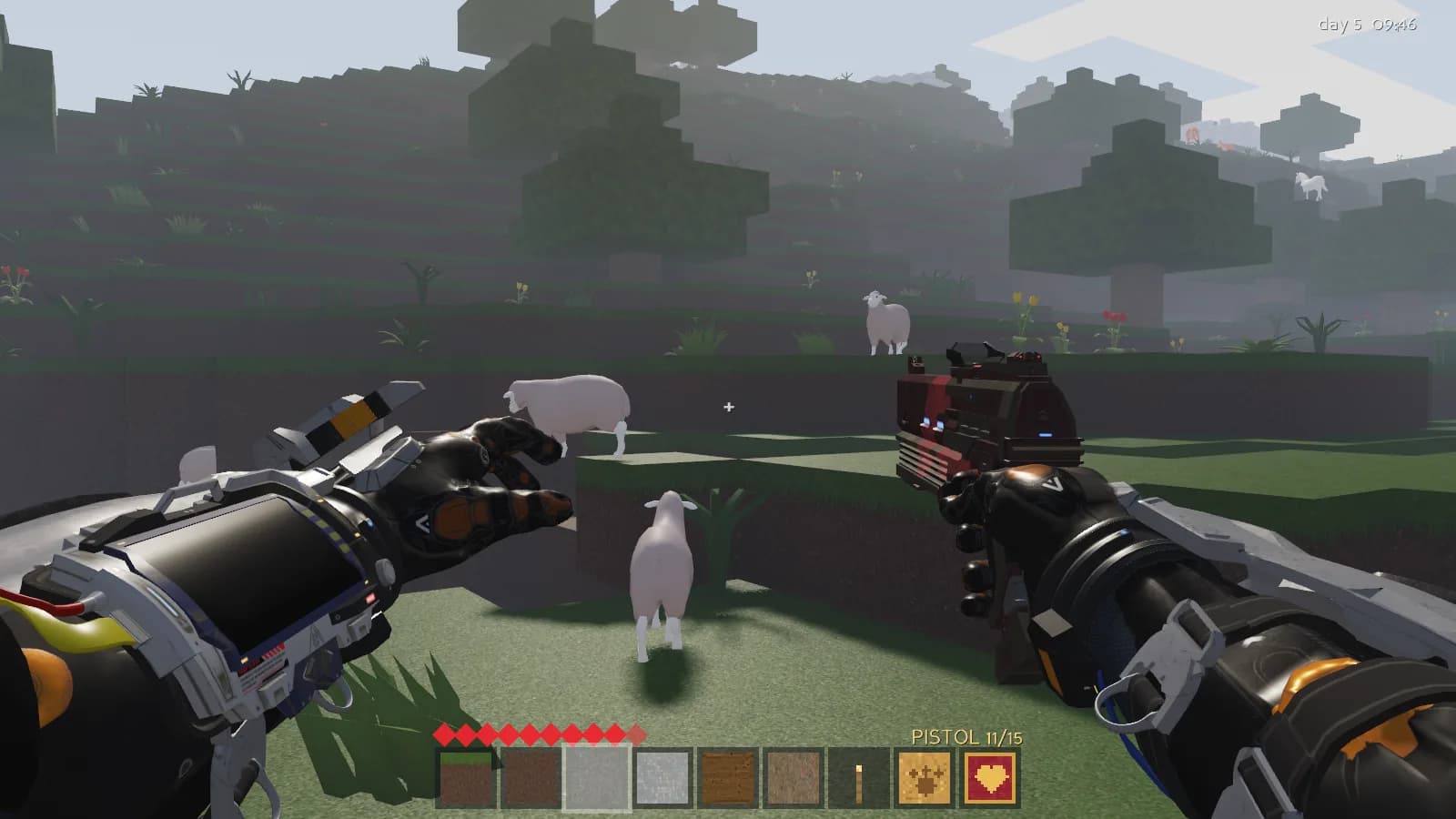
Escort as many animals as you can to safety, armed only with your wits, and a gatling gun or rocket launcher if you happen to find one. Build a sanctuary and protect your flock.
The whole loop is in this build. Win animals over with treats, claim ground with a banner, and keep the residents alive through a night that has wolves in it. Around that sits a wilderness of tall mountains, flowing water and modelled forests, and a city that has come alive since our last release: traffic on the streets, lamps against the night, furnished rooms behind real doors, and a street map in the corner to find your way. Built on Pax3D, our own rendering engine.
Early access · Windows 10 / 11 (64-bit) · 526 MB zip · Free
On film
Shot inside the game, with the game’s own camera.
Everything here was filmed and recorded inside the game, with its own camera and its own recorder. No capture software, no editing suite, no touching up.
A day in the living city
1600x900 · 30 fps · 71 seconds
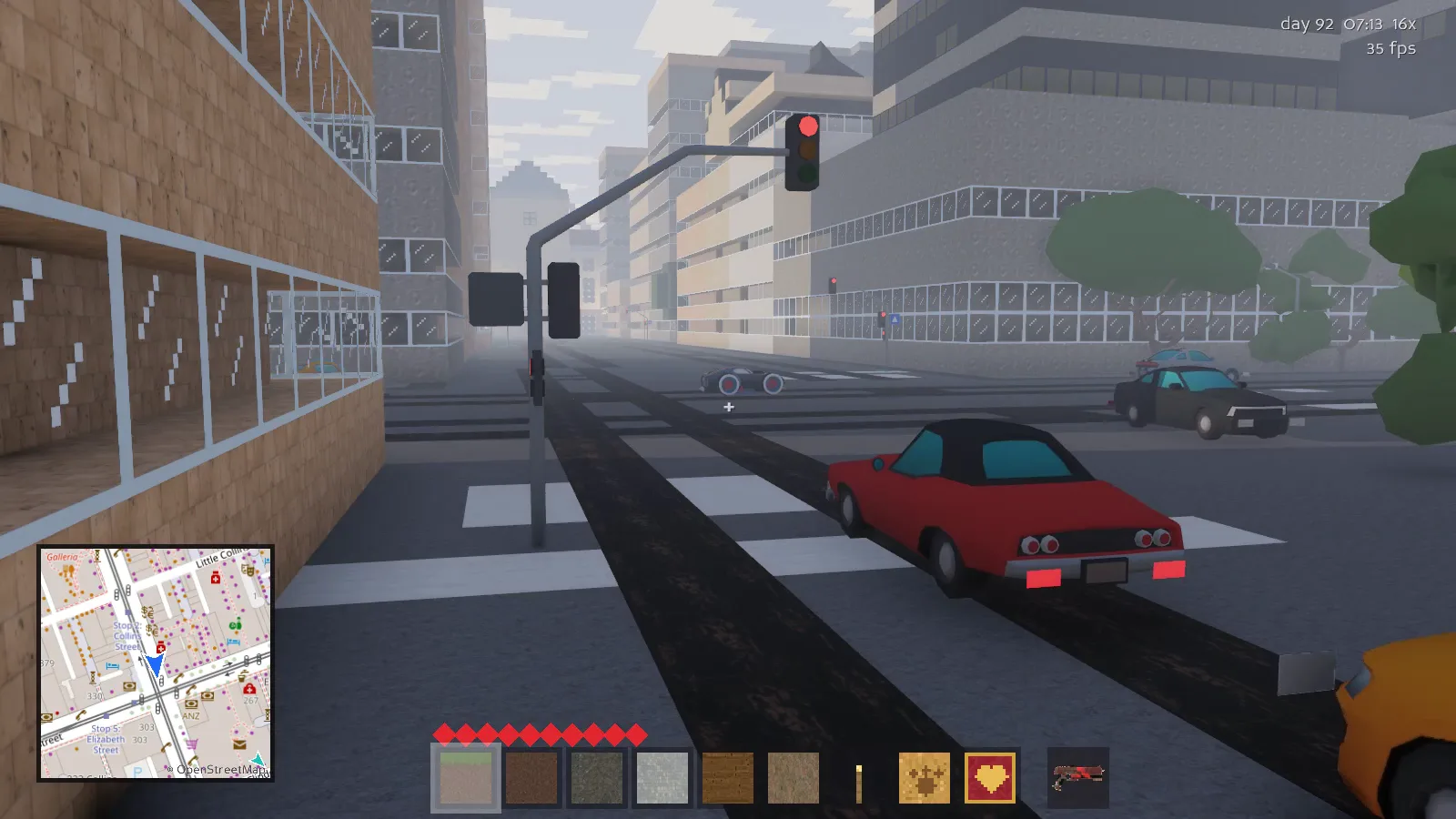
Day ninety-two, a street corner in the middle of town, watching the place run. Cars pull up at the red, wait, and move off; a taxi noses through; the police are about. Time runs at sixteen times normal, so morning becomes lunchtime, the laneway lanterns come on at dusk, and by the end the new street lamps are holding the streets against the dark. The map in the corner follows along the whole way.
Nightfall, and a hippopotamus
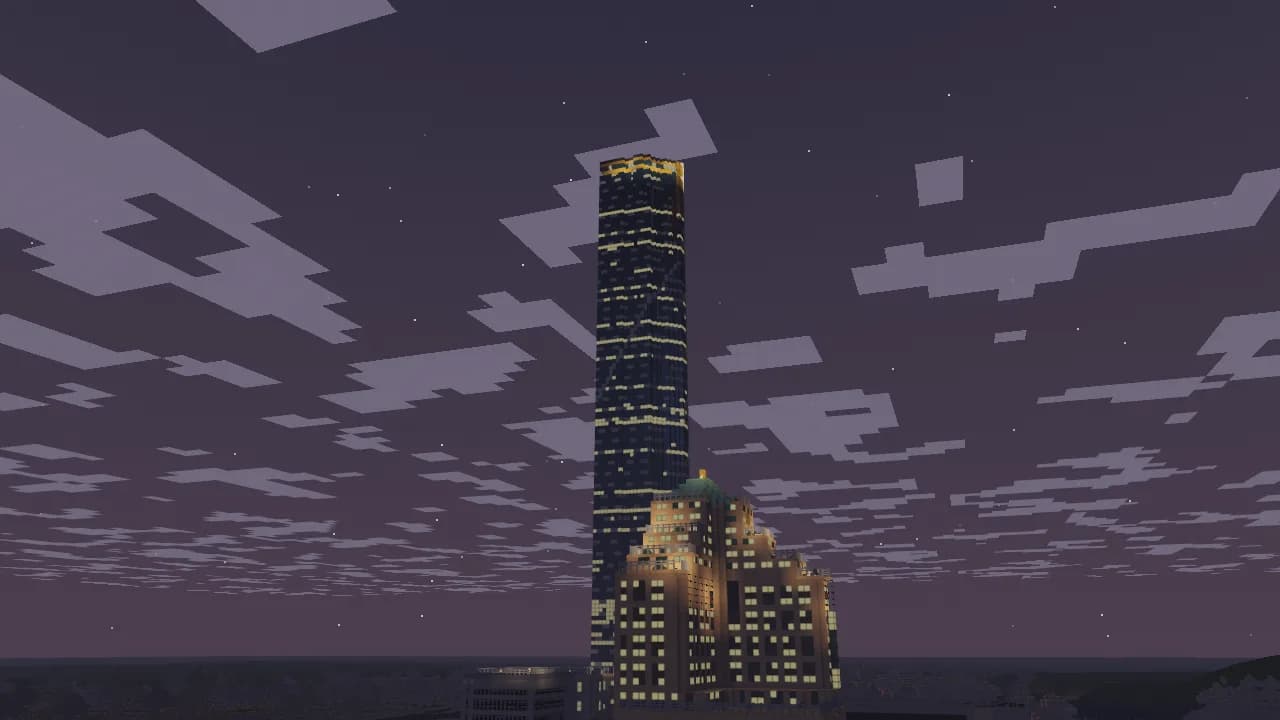
Day thirty-two, just before six in the evening, on a rooftop in the middle of town. There is a hippopotamus up here and we have chosen not to ask. Time is running at thirty-two times normal, so fifteen hours pass in twenty-four seconds: the sun goes down, one tower's windows come on, the stars turn over, and the light comes back. When this was filmed that tower was the only one through the lighting pass, which is why the skyline stays dark behind it. The whole town is lit now.
1600x900 · 60 fps · 24 seconds
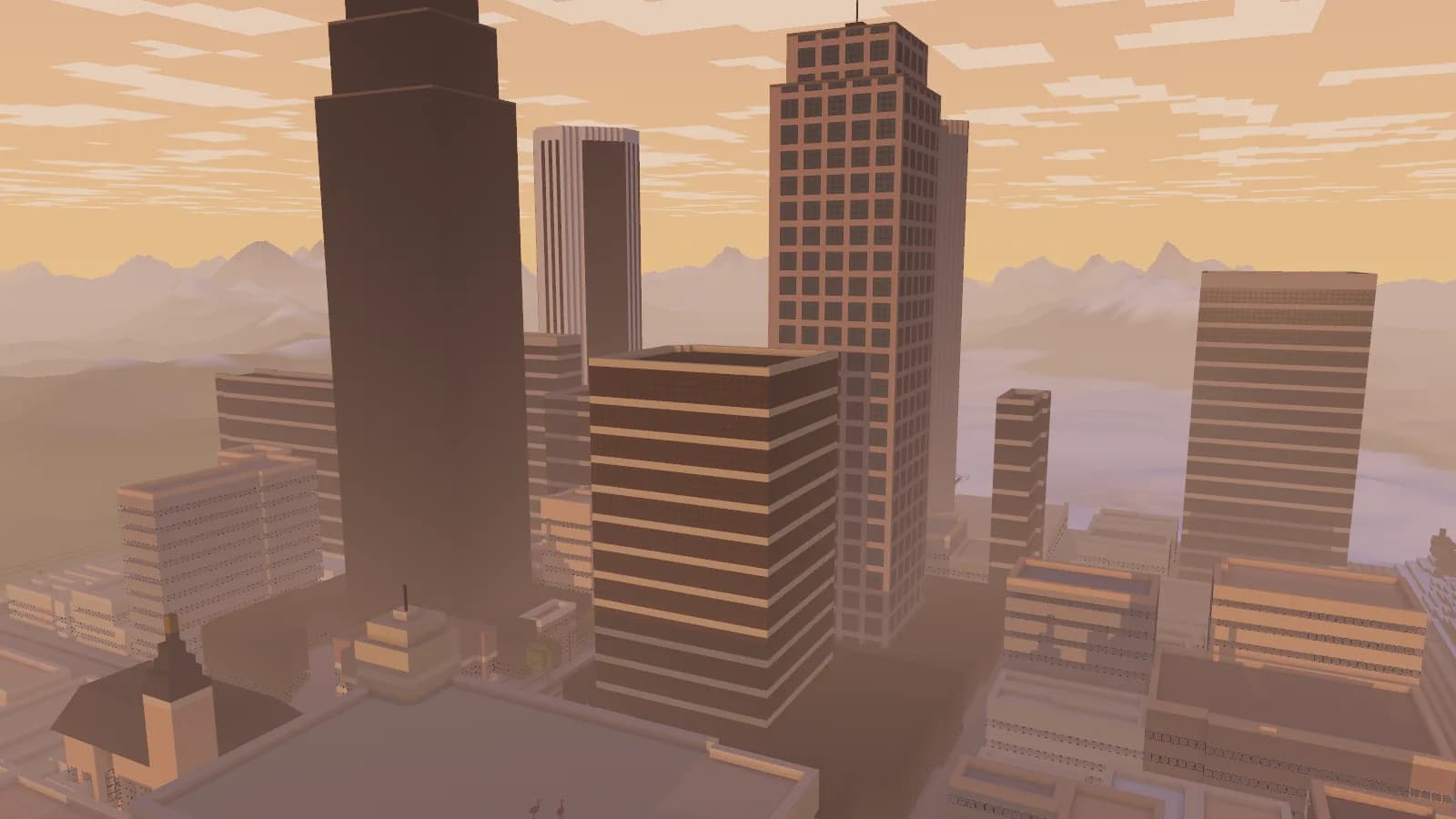
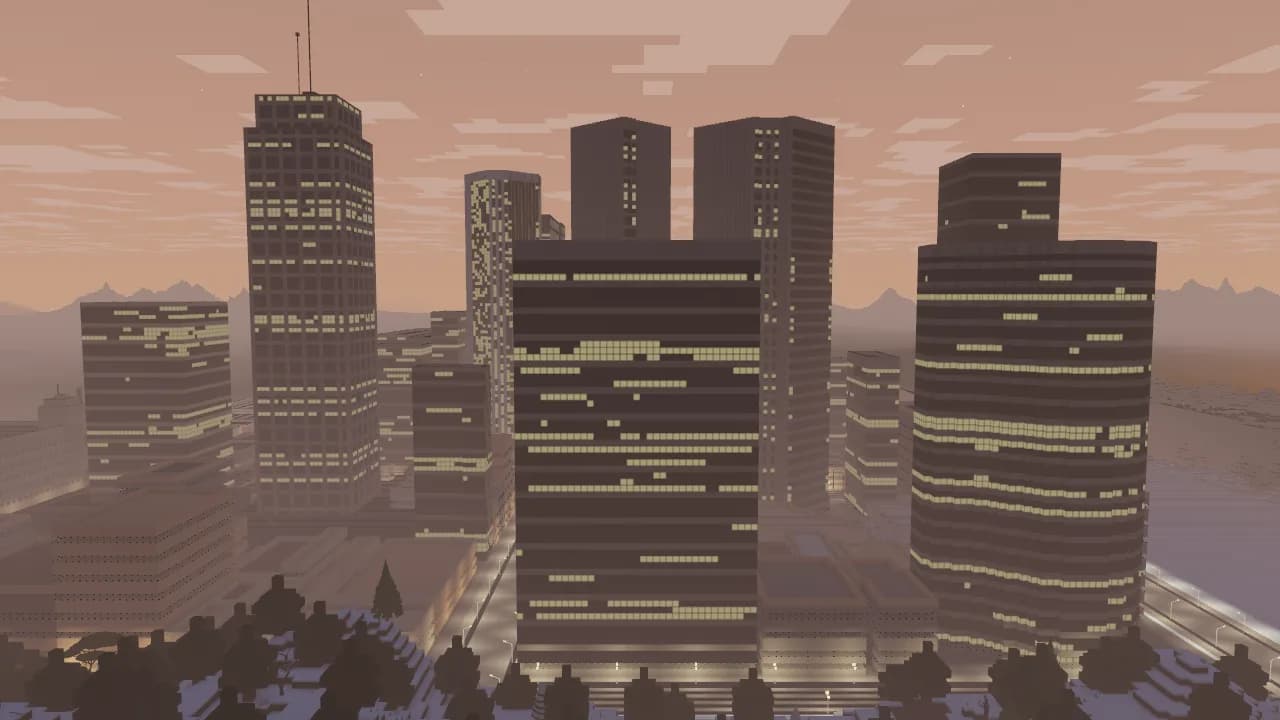
The big end of town at dusk
Eight shots flown by the in-game camera, cut together with sound. The whole flight is written in a text file the game reads: where the camera starts, where it looks, how fast it moves, what time of day it is. Nothing here is a render. It is the game, recorded while it runs.
1600x900 · 60 fps · 38 seconds
Good morning
The experimental nuke, third setting, aimed at a mountain that had done nothing wrong. Watch the health bar afterwards. Standing this close to your own device is a choice, and the game charges for it.
1600x900 · 60 fps · 49 seconds
What’s in the box
Win them over, walk them home
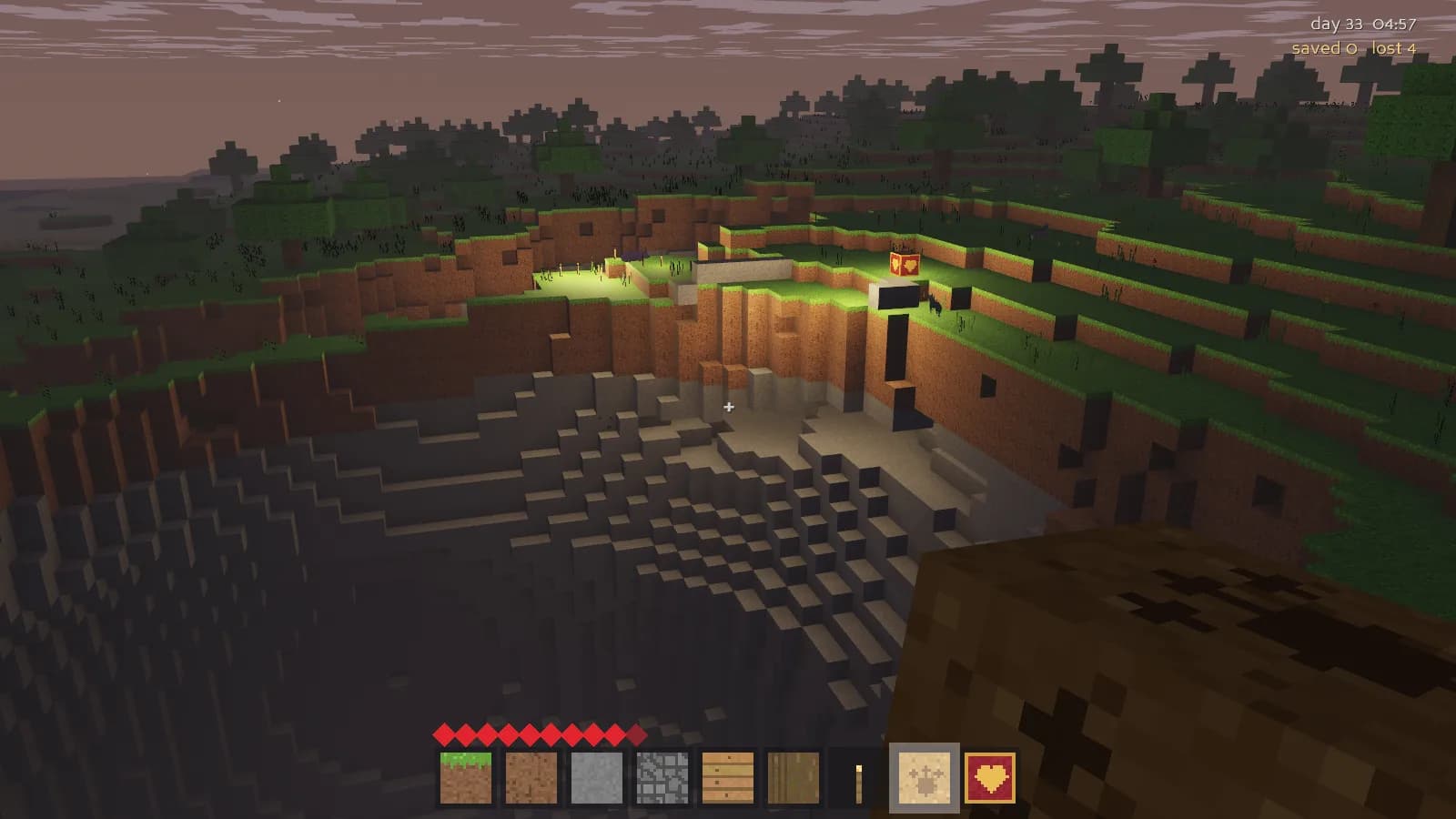
Offer a treat and a frightened animal decides you are worth following. Plant a sanctuary banner, lead your flock inside, and they settle in as residents. The count on your screen is saved and lost, and it remembers both through save and load.
Everything here has hit points
Wolf packs work the plains, crocodiles wait at the water, bears range farther after dark. They hunt with intent, they lunge, and they retreat when it goes badly. You have twenty hit points and a row of hearts. The death screen sometimes reads Eaten by a bear.
Streets with traffic on them
Cars run the city on their own errands. They queue at red lights, give way to oncoming traffic before turning across it, and pull out again when the way is clear. Taxis and police work the day shift, racers come out after midnight, and headlights sweep the crossings all night.
Street light you can stand in
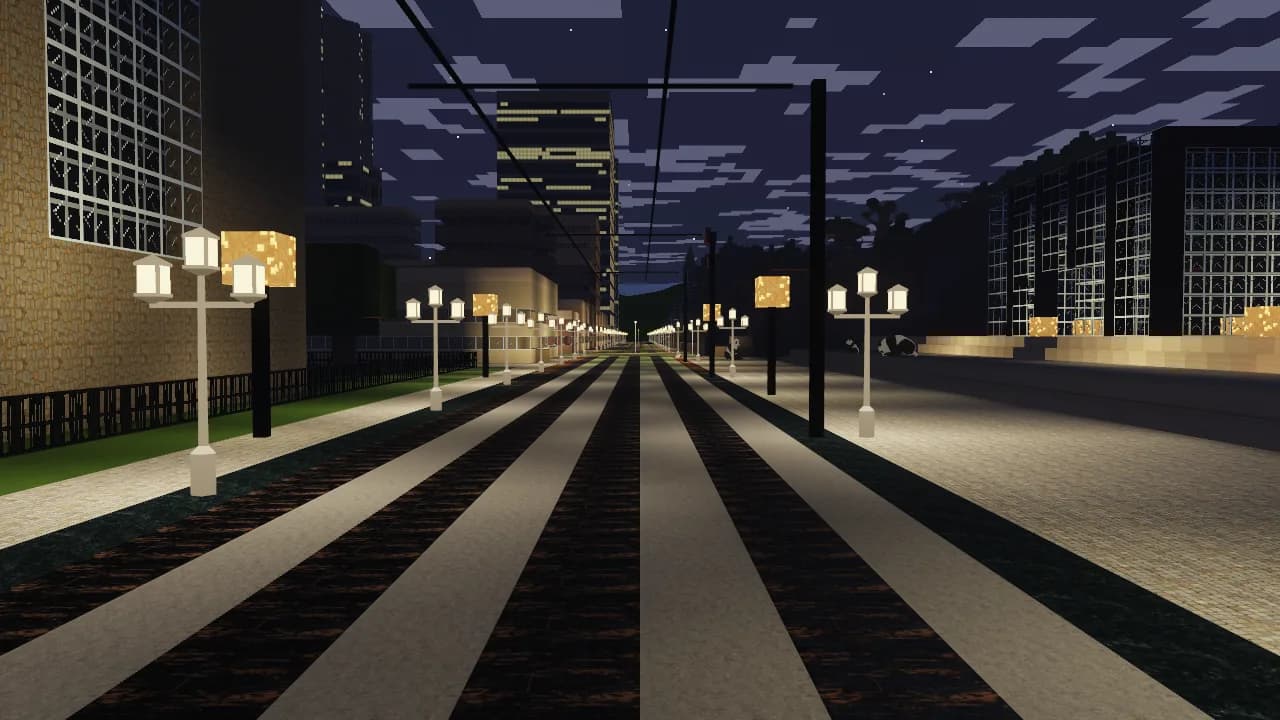
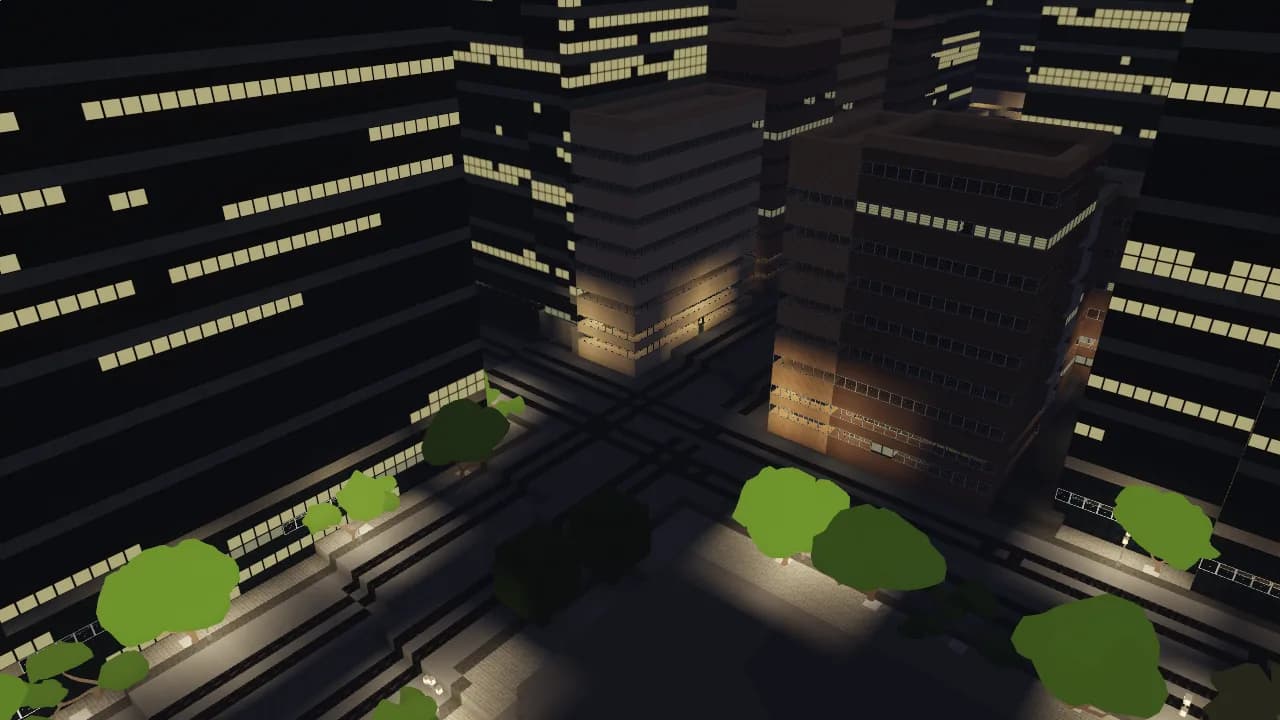
More than four hundred and fifty modelled street lamps hold the city at night: cobra heads over the carriageways, twin poles on the boulevards, lanterns in the arcades. Their glow is baked into the world itself, so all of it together costs nothing to render. Shoot one and it falls over, which we mention for completeness.
Rooms behind the doors
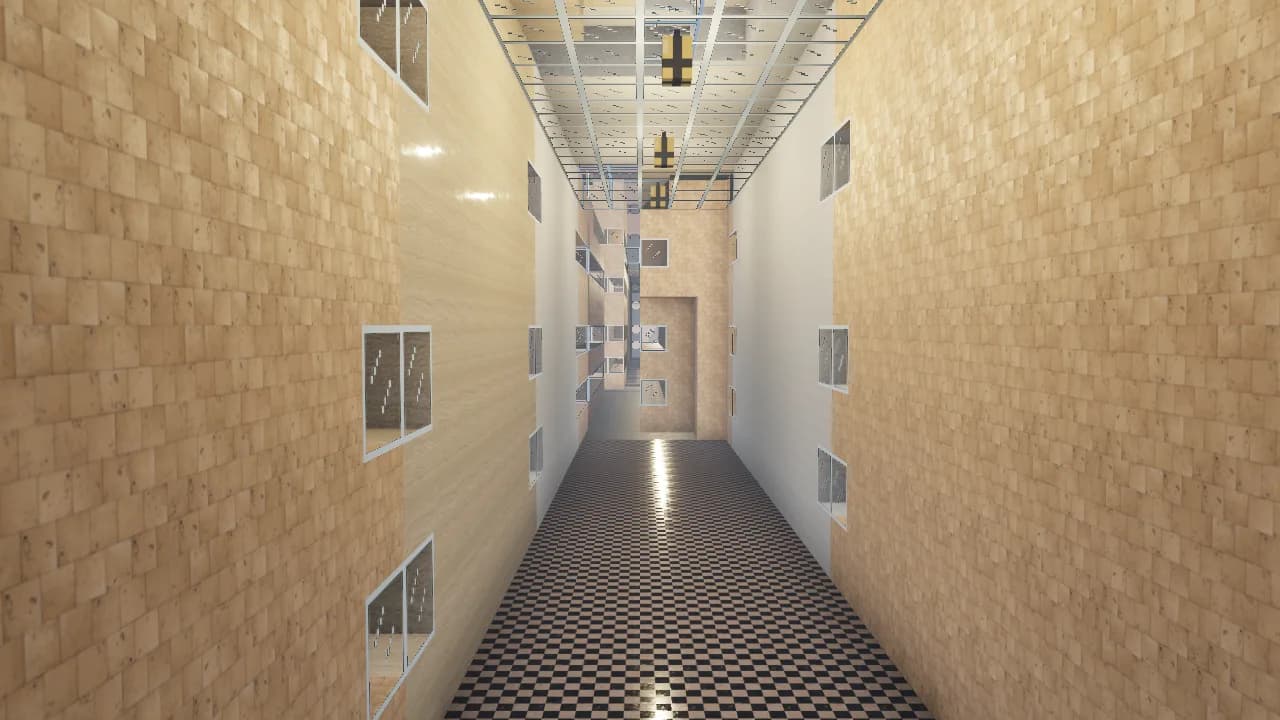
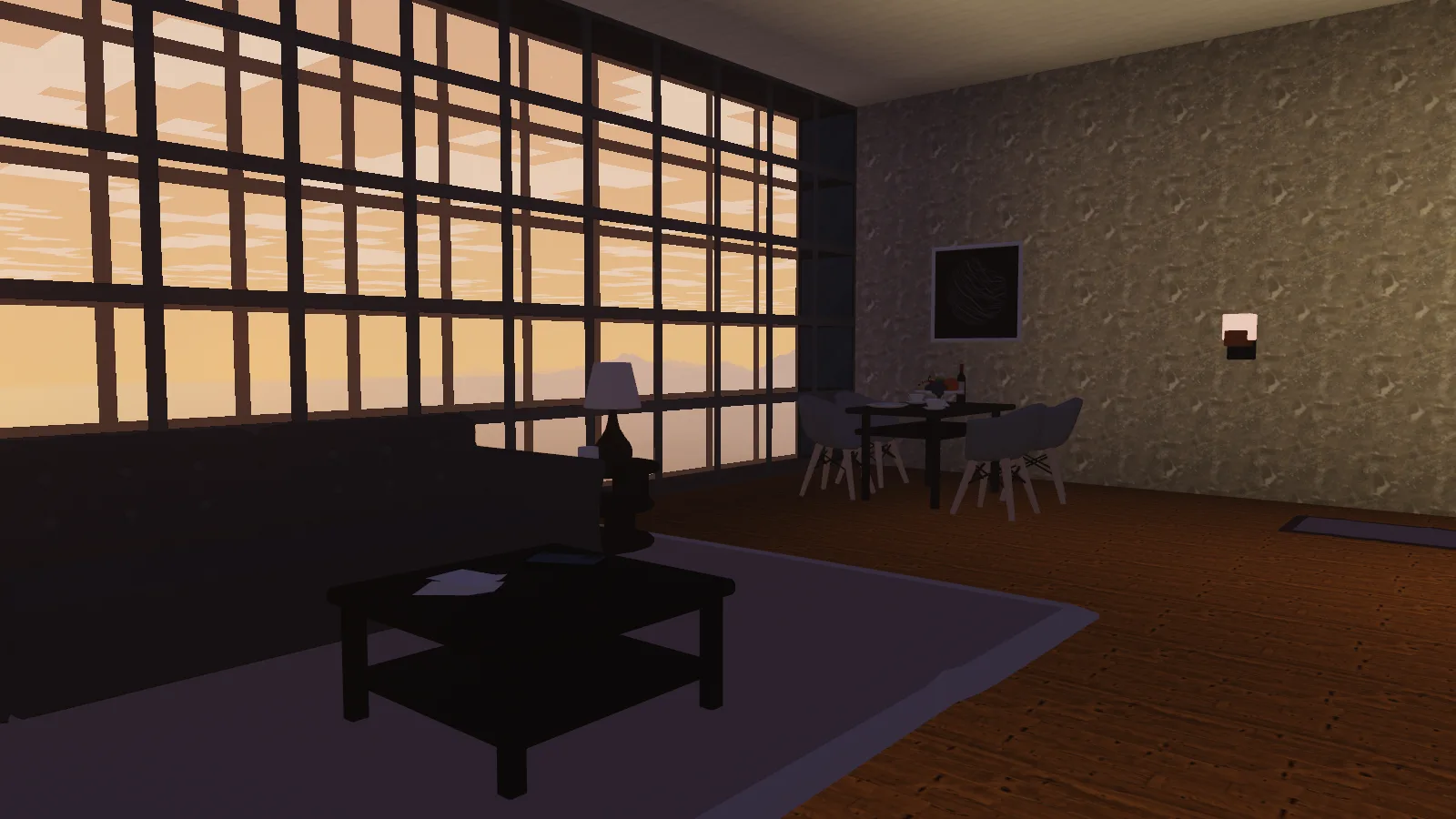
Southern Cross East has a street lobby, a lift that really rides, and a furnished floor of apartments twelve storeys up. Rooms wake as you approach: open a door and the sofas, kitchens and lamps are simply there, with the whole city in the window.
A map that knows where you are
In the city, a real street map sits in the corner under a blue arrow, drawn from the same public map data the streets were raised from. Four zoom levels, a large mode for planning a route, and markers for working doors and home.
An armoury with poor manners
A pistol, a gatling, a rocket launcher, and one experimental nuke on three settings. Splash damage does not check species before it lands, so aim well. Accidental kills go on your ledger. Rockets fling whatever they fail to kill, and a chicken travels surprisingly far.
The scenery is a valid target
Bullets pock and crack blocks until they burst. Shoot a trunk and the whole tree comes down. Rockets carve craters into the ground or the side of a wall, and anything left hanging in the air collapses and shatters where it lands.
Worlds that go a long way up
Seeded terrain three hundred and eighty-four blocks tall, so peaks stand well over a hundred blocks above the sea and caves run all the way to the summits. Cliffs shed their soil into banded rock, glaciers sit in the high cirques, and the far ranges hold the horizon out past two kilometres.
Water that flows, lava that does not care
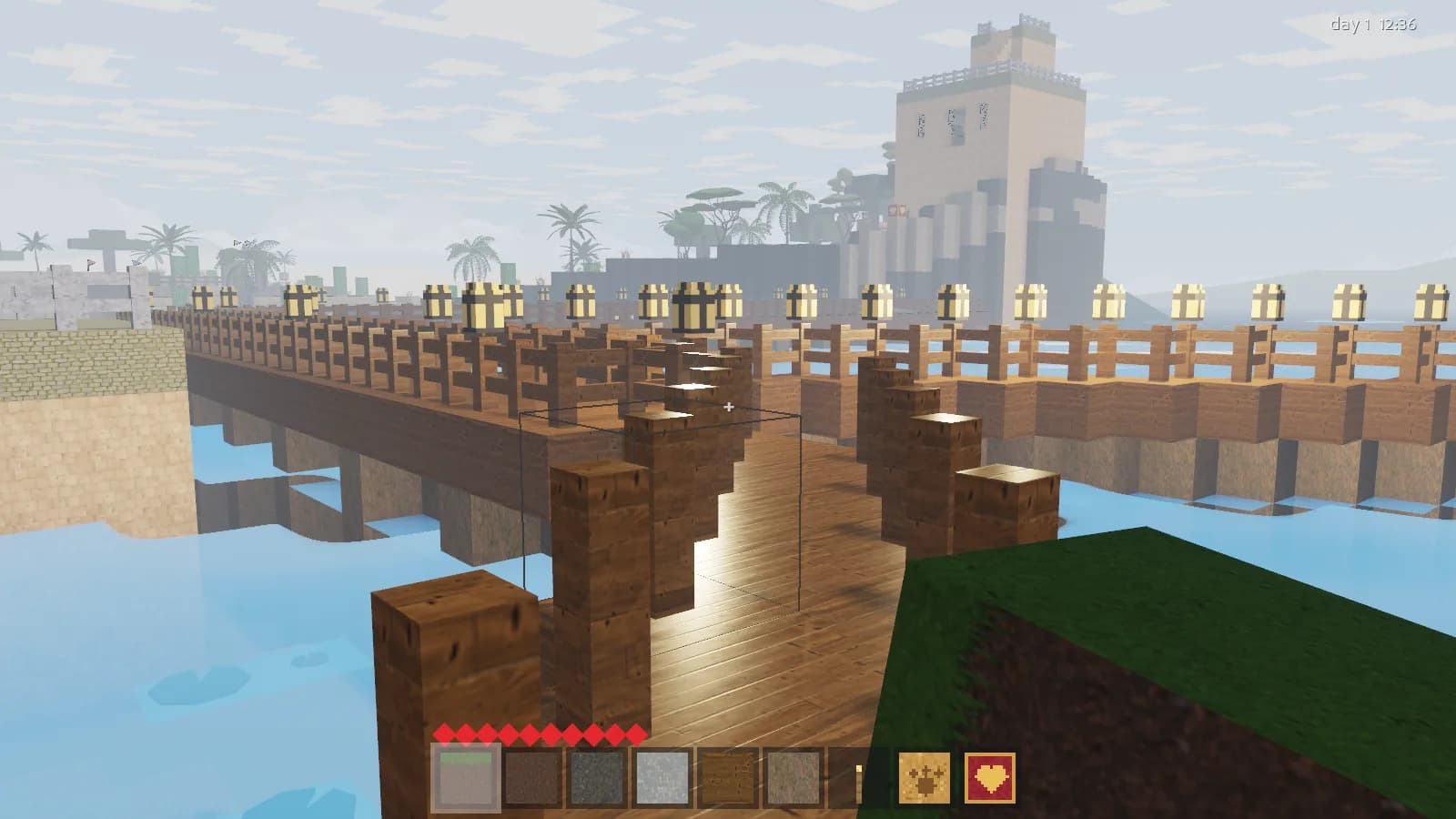
An ocean with real surface and depth, rivers cut through the massifs, and water that actually runs: dig a channel and the sea fills it. Lava pours downhill and takes six hit points a second off anyone who tries to swim in it. Where the two meet you get basalt.
Forty-seven kinds of plant, most of them modelled
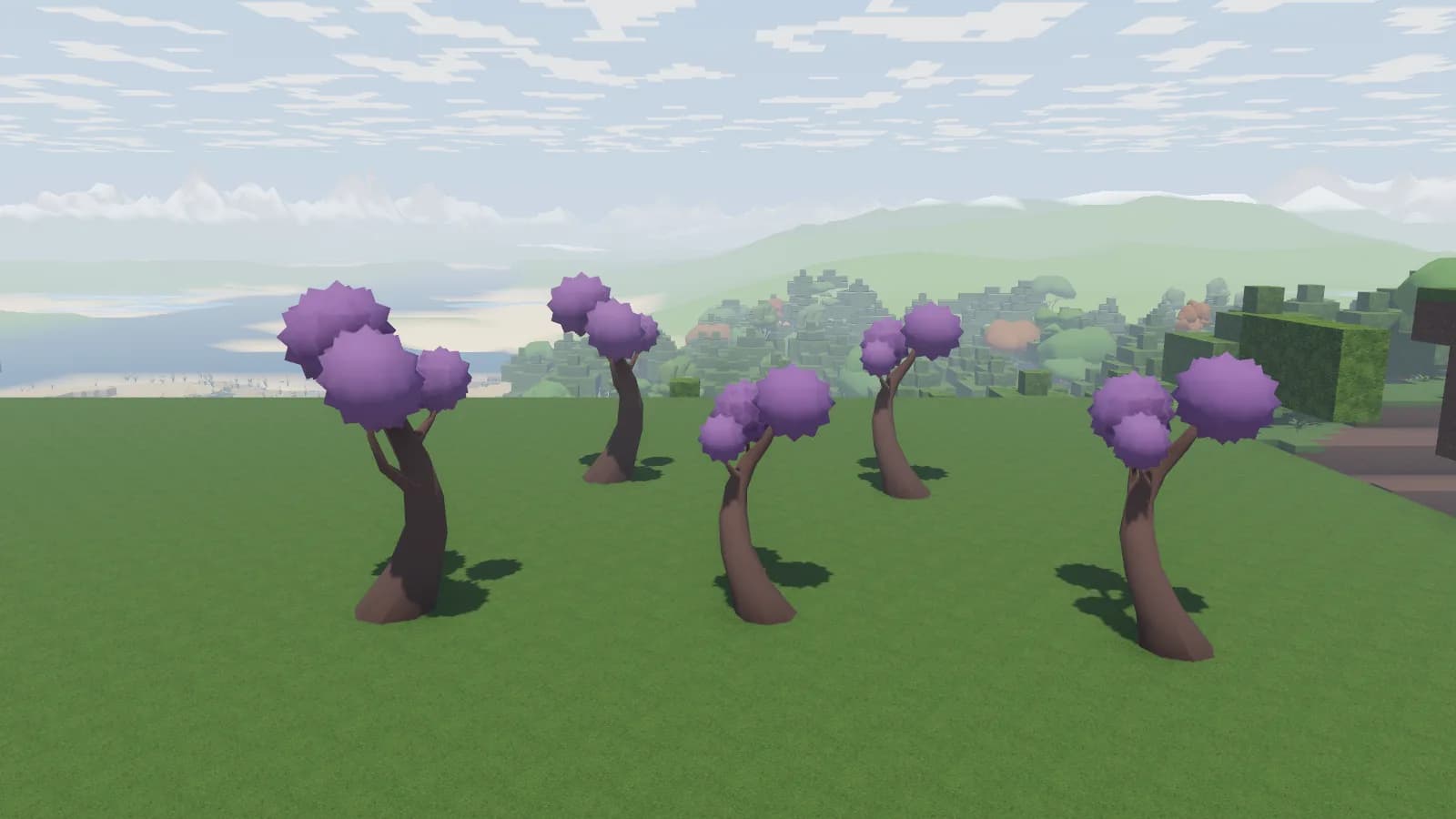
Trees are real geometry rather than flat cards: oak, birch, fir, palm, acacia, baobab, saguaro, bamboo, blossom trees in bloom, and burnt pines standing in old fire scars. Mushrooms and windfall logs sit on the forest floor, pumpkins and gourds wait in the farm rows, and seagrass and kelp grow underwater. One shot to a trunk fells the tree.
Three hundred and nineteen blocks
Stairs and slabs that you walk up without jumping, roofs that merge into a smooth pitch, doors on real hinges, glass panes, iron grilles, balustrades, lanterns, fences with gates, and scanned stone and timber under all of it. A category picker on B keeps it findable.
Real light, real shadows
A true directional sun with soft shadow maps, ACES tonemapping and bloom. The twenty minute day rolls through sunrise, noon, dusk, a star field and a moon, and city windows come on through golden hour and blaze at midnight. Hold the time dial and the whole cycle wheels past in about a second.
Weather on its own schedule
Overcast fronts roll in, rain streaks past your window but never under your roof, snow drifts over the high country, and storms flash and rumble with real thunder. Every world runs its own forecast off its seed.
A soundscape that walks with you
Forest, birdsong, insects, river and surf crossfade as you move. In town, engines idle at the lights and passing cars swish by. Go underground and one bed rises while the rest fall away. Water has a whole voice of its own: the break when you go in, strokes as you swim, a muffled world under the surface.
A camera crew of one
F8 hides the interface and hands you a camera on a damped rig. Set keyframes and it flies a smooth spline through them. Write a shot script and it films the series unattended, holding the light where you want it. F9 records what you see, with sound, to an mp4, if you have ffmpeg installed.
Packed in the box
Two worlds
come with it.
Most of what you see here we built ourselves, block by block, using a build interface we drive from outside the game. Two of those worlds ship with the download and install themselves the first time you run it.
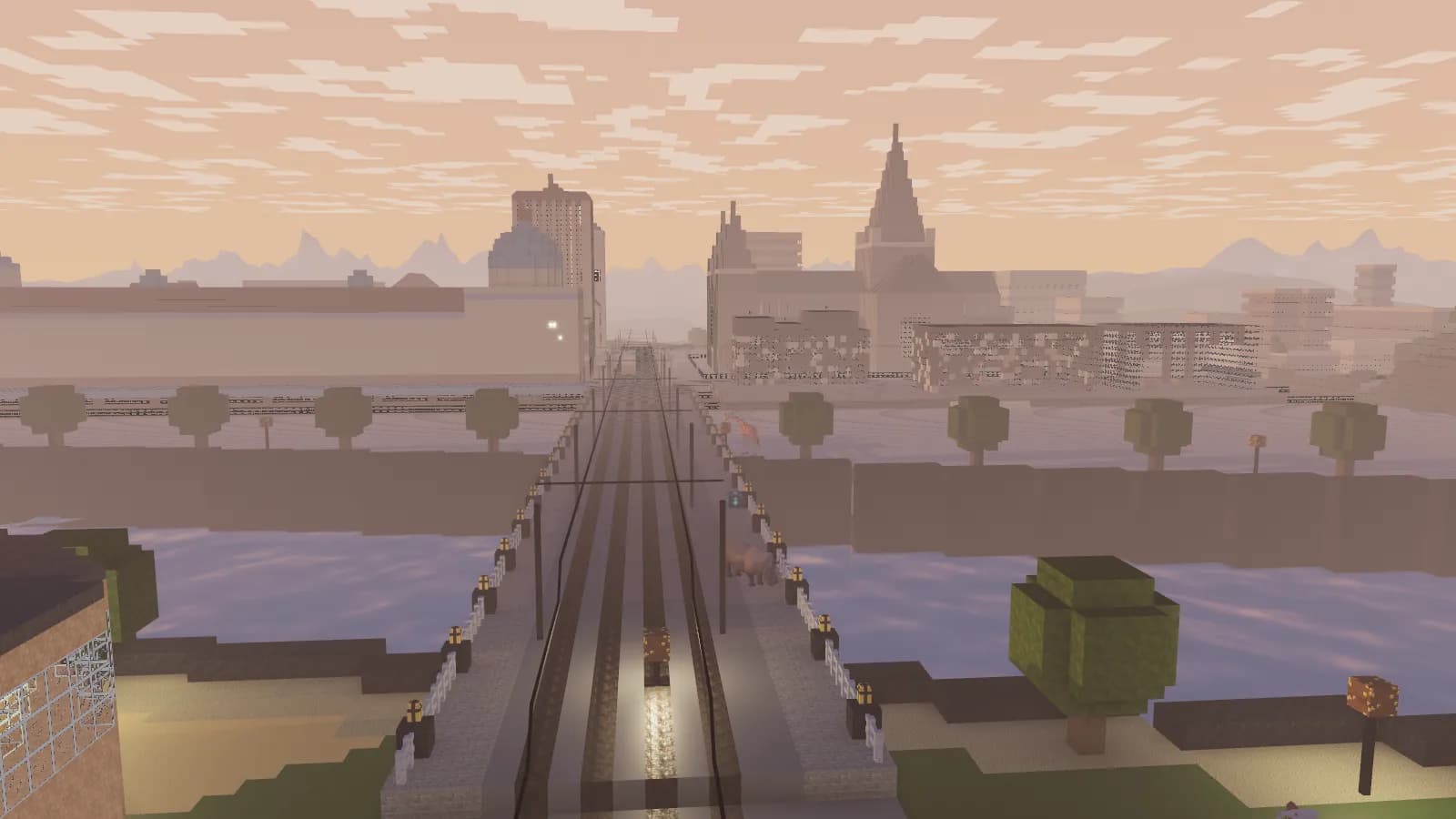
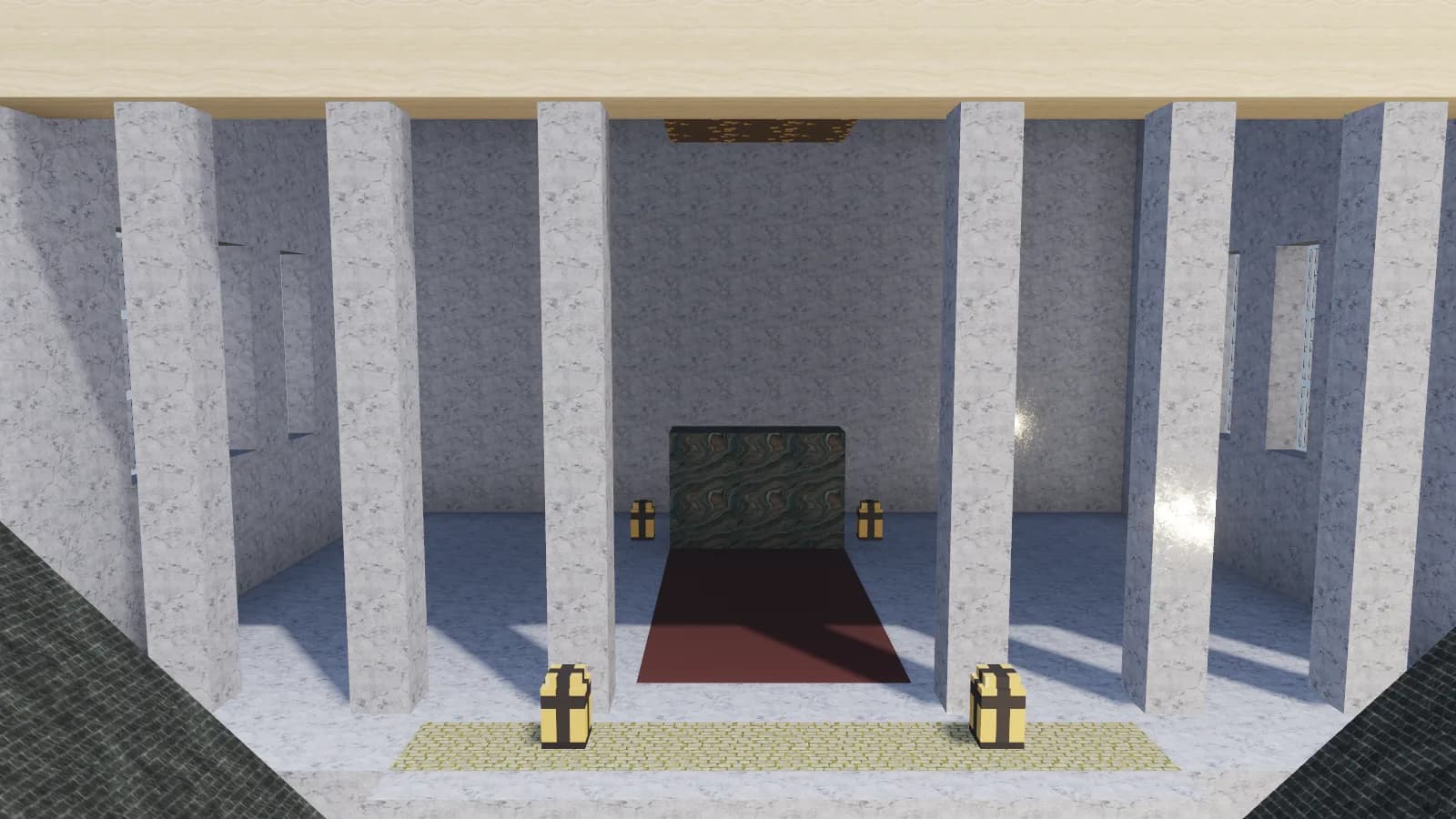
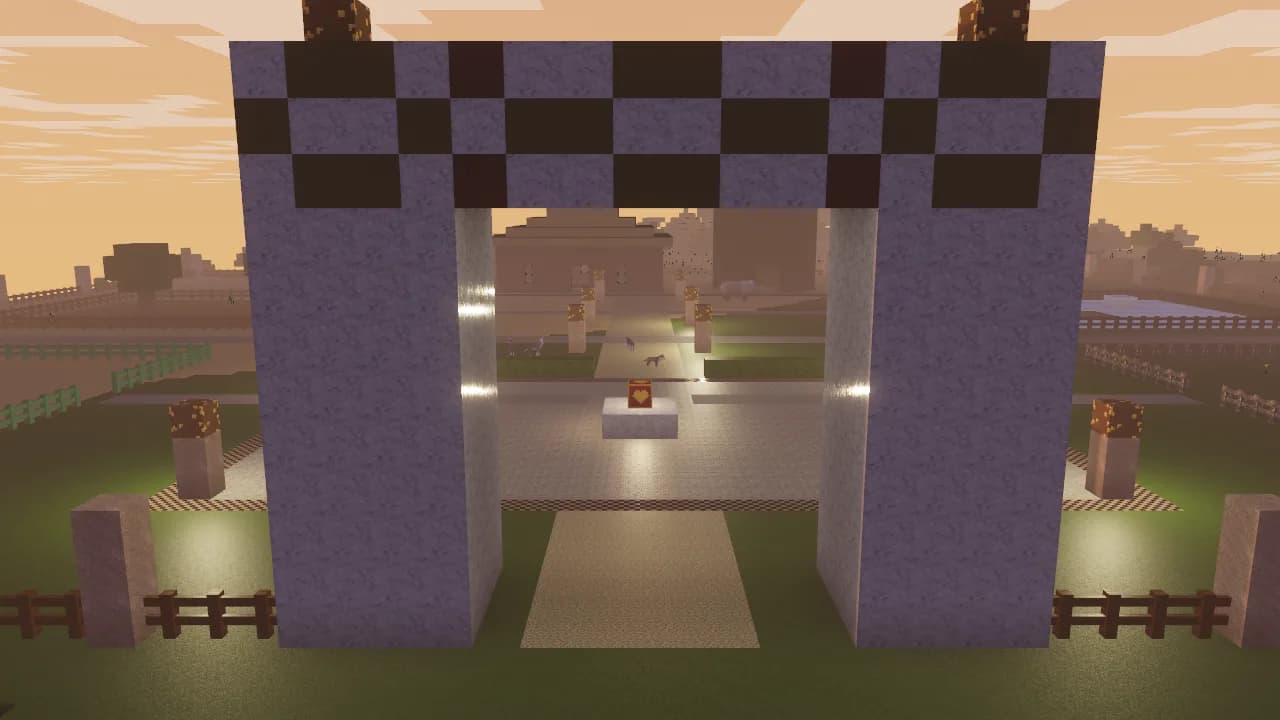
One is a monastery cut into a cliff face, five terraces up a mountainside, with a rock-cut sanctum at the top. The other is a slice of central Melbourne raised from public map data: real street widths, real building footprints, towers at their measured heights, and laneways you can walk down. The city now stands in its real landscape too, with suburbs, bay and ranges raised from elevation data running out past the horizon. Your own seeded worlds sit alongside them in the menu.
Field notes
Places we have been
Download
Free. As in free.
No ads, no account, no telemetry, no catch. Download the zip, unpack it anywhere, and play.
Early access · Windows 10 / 11 (64-bit) · 526 MB zip · Free
SHA-256 d74aa51f01243b448ebf882c8c6b9f07acbb894b99fdd0faf543cd205b59e6f2
Getting started
- 1.Download AnimalCrossfire-win64-20260731.zip.
- 2.Unzip it anywhere. Desktop, games folder, USB stick, all fine.
- 3.Run PaxCraft.exe inside. That was the game’s working title, and it lives on in a few file names for now. Your worlds save automatically.
Windows may show a SmartScreen notice the first time you run it, because we haven’t bought a code signing certificate yet. Click More info, then Run anyway. If you like to check what you download first, the SHA-256 above is there for exactly that.
It runs on
Any reasonably modern 64-bit Windows 10 or 11 PC with OpenGL graphics. A dedicated GPU buys you longer view distances, and the settings menu on V has a live frame counter so you can tune it by eye. Keyboard and mouse, or an Xbox or PS4 controller.
In this build
Early access31 July 2026
Two days separate this build from the last one, and the city took most of them. It has traffic, street light, furnished rooms, a map and its own landscape now, and the wilderness kept growing around it.
- Traffic. Cars drive the city streets on their own errands: they stop at the lights, queue behind each other, give way before turning across oncoming traffic, and switch their headlights on at dusk. Taxis and police by day, racers after midnight, and all of it audible from the footpath.
- More than four hundred and fifty modelled street lamps light the city at night, in four styles matched to their streets. Their glow is baked into the world, so the whole city of light costs nothing at all to render.
- Baked block lighting everywhere: torches, lanterns, glowstone and campfires now cast without any budget or pop-in, caves read properly dark, and ambient occlusion reaches into close range so interiors have corners again.
- Southern Cross East is open. A street lobby, a lift that rides, and six furnished apartments on level twelve, behind doors you can open, with the whole city in their windows.
- A street map in the corner of the screen, drawn from the same public map data as the city itself: four zoom levels, a large mode, and markers for working doors and home.
- The city found its landscape. Suburbs, bay and ranges raised from real elevation data now run out to the horizon, shorelines come down to a clean sand line, and Albert Park Lake holds water with lilies on it.
- Time has a dial. The day runs at up to a thousand times normal speed on Ctrl+T, sunrise to sunrise in about a second, and the night city keeps its schedule at any pace.
- The block library reached three hundred and nineteen, and the plant list forty-seven: blossom trees, pumpkins and gourds, mushrooms, windfall logs and standing deadwood in old burn scars.
- Your weapon lives in the hotbar now, Z puts everything away for a quiet walk, and the block-selection box became a soft hologram that stays readable day and night.
- Credits on Shift+F1, an emergency teleport in the settings menu for the truly stuck, and a guard that catches you if the world ever tries to drop you through the floor.
From the workshop
The workshop got ahead of the box.31 July to 5 August
Everything above this line is true of the download. Everything below it is true of the workshop build, five days further on, and ships with the fifth public build. We would normally wait and tell you then, but these five days were absurd.
The film and the screenshots here were taken inside the workshop build with the game's own camera, on the days the work landed. Timestamps are the in-game clock.
Melbourne, one day
1600x900 · 60 fps · 59 seconds · workshop build, 1 August
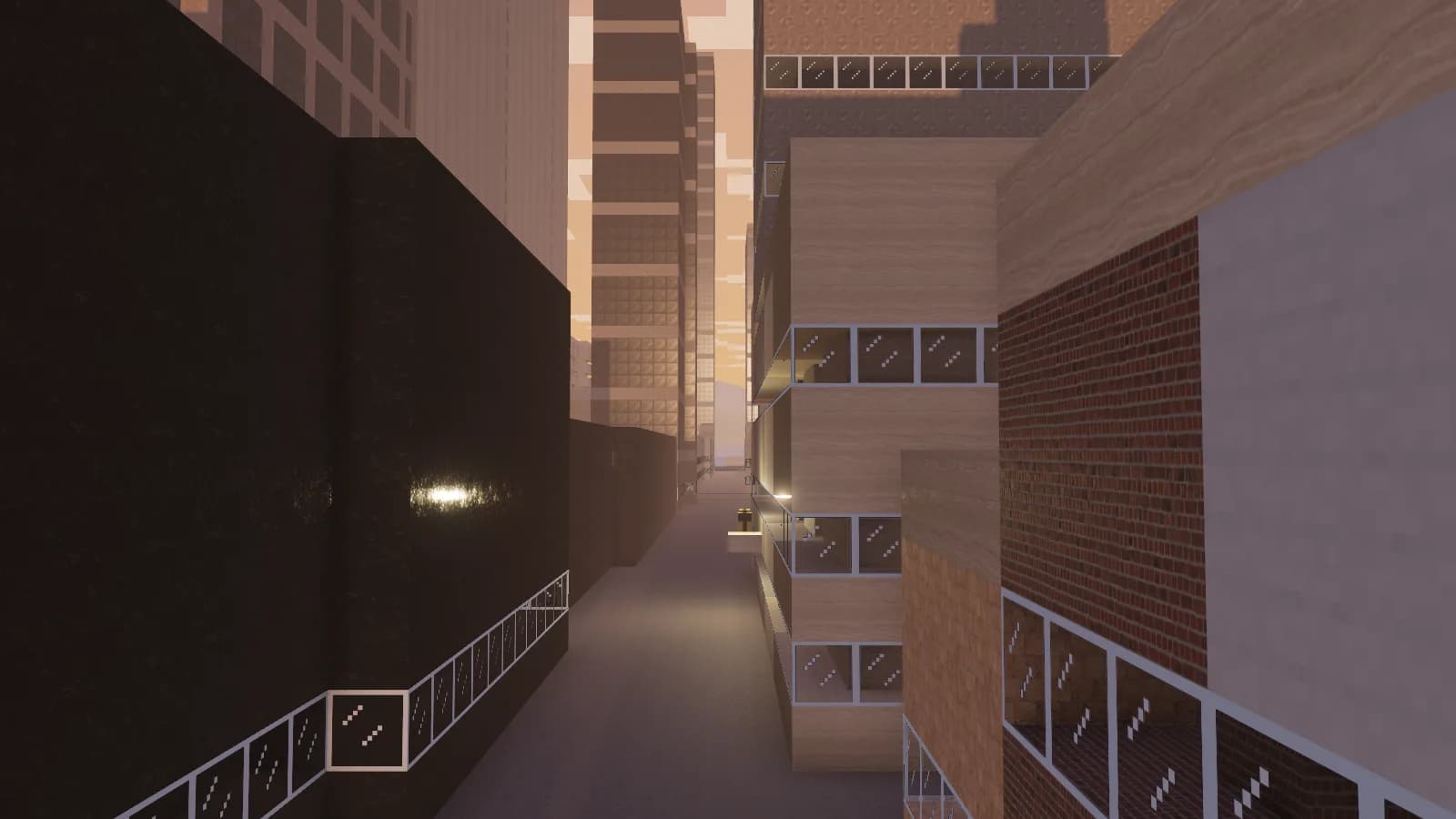
Twelve shots from dawn to night: first light over the bay, the Yarra at sunrise, a run down Flinders Lane at street level, a drift across the Collins and Elizabeth corner through live traffic, the noon orbit of the big end of town, a pull away from the Treasury, an apartment while the tower opposite lights floor by floor, Eureka at golden hour, the skyline switching itself on, a night junction, and a dusk postcard to close. The whole film is a text file the game reads: times of day, lenses, camera paths. We pressed one key and it filmed itself.
The night has company
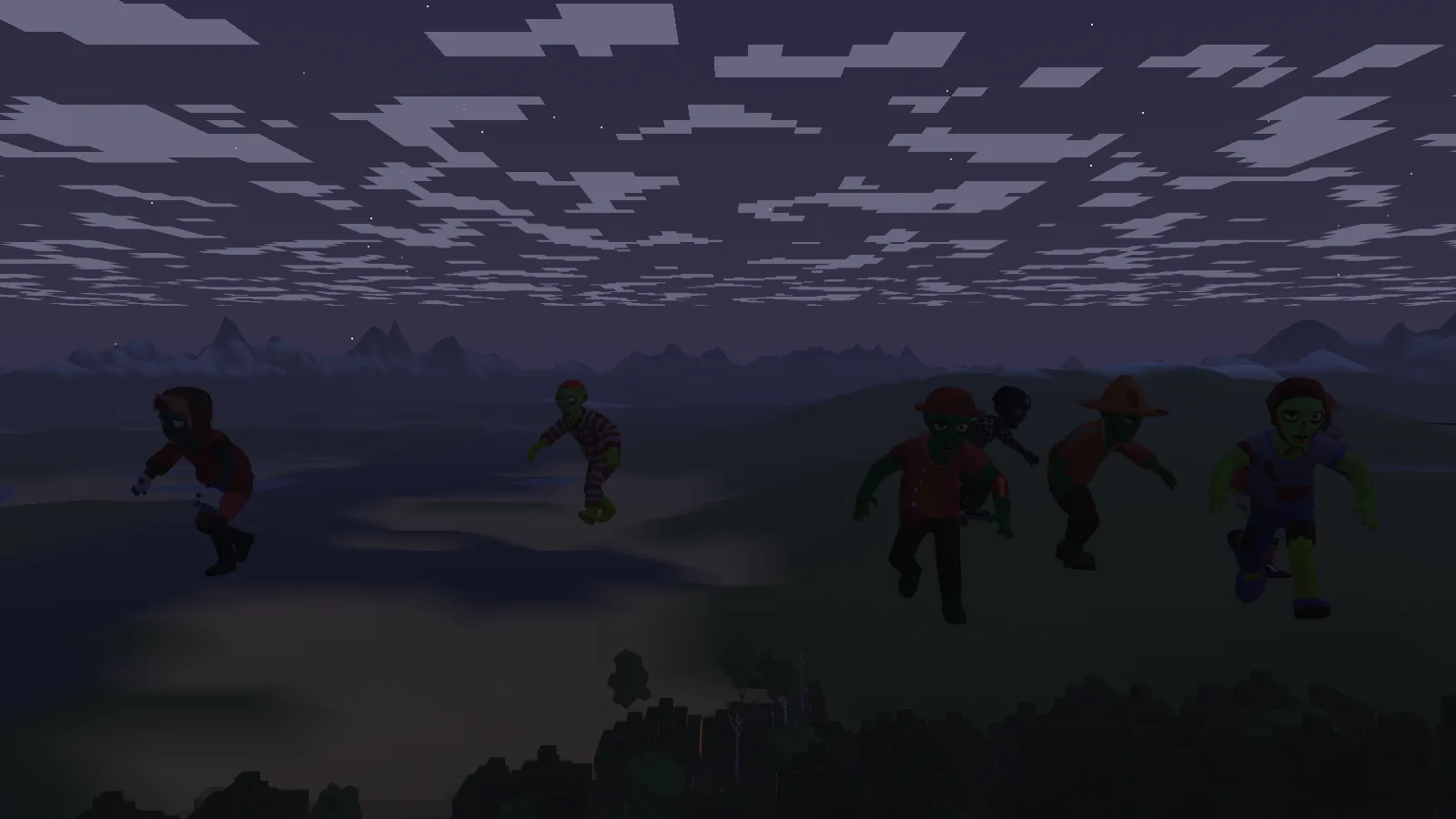
Sixty distinct zombies rise out of the ground after dark: citizens, uniforms, one with no head. On seeded worlds roughly one night in four brings a proper horde, gunfire draws them, and every animal in the district bolts while the dead are up. They walk slower than you and surround you anyway. Horror music finds you when they do, they show as red marks on the map, and four playtest rounds went into the shamble alone. The impatient can press X and summon their own.
You can ride the trains
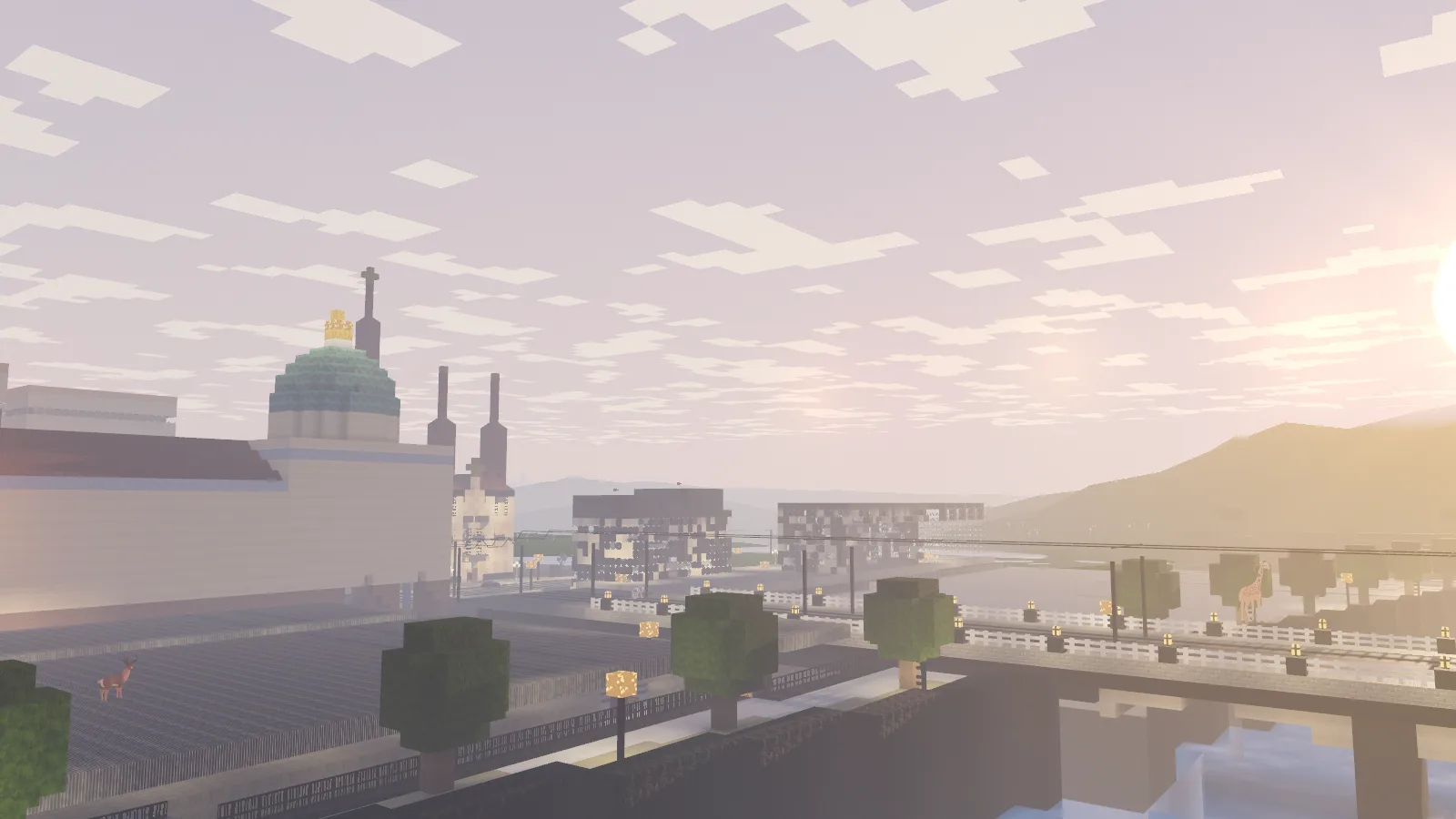
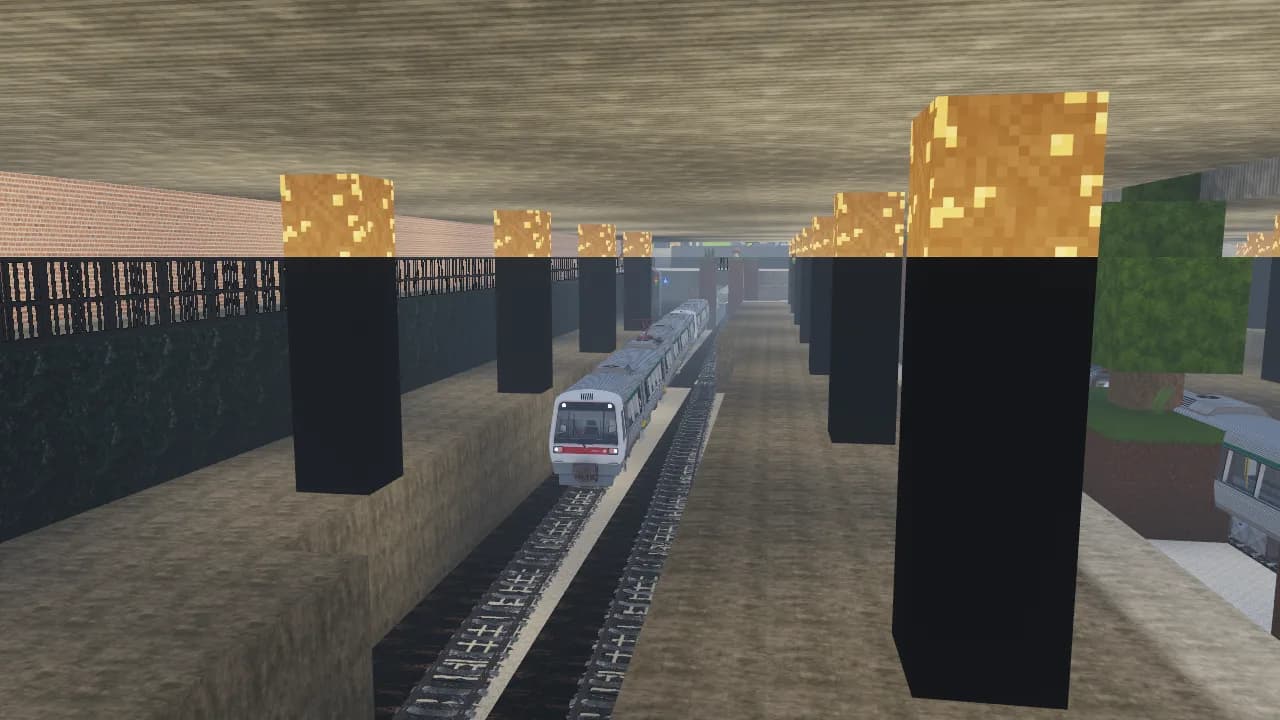
Real modelled track lies over the terrain like a model railway, and services run to a timetable out of a rebuilt Flinders Street Station, easing past working signals to stand at Platform 3. E boards, F5 walks you through four views, and one of them lets you pace the aisle of the carriage while the world carries past the windows. The first corridor runs east to Richmond.
The Yarra runs through it
Twenty kilometres of river, carved from the bay up through Richmond and Hawthorn to Dights Falls. In town it wears the classic silt brown while the sea stays blue, the Southbank Promenade is finally wide enough to walk, and the Evan Walker footbridge was rebuilt after a screenshot proved you could not cross it politely.
Landmarks with insides
Eureka Tower stands at its measured 297 metres, diagonal slash, red stripe and gold crown, with a lift to Skydeck 88 and the glass box hanging off the side. The Langham got its lobby, suites and penthouse, St Paul's was re-set on its true axis and given its organ, and the Shrine of Remembrance and the Rialto joined the map. Press G and the game demolishes a landmark and rebuilds it as a different design while you watch.
Press J to be somewhere else
A fast travel menu, because we kept building things too far apart to visit. Thirty-eight destinations in Melbourne, two of them furnished rooms, and twelve in the monastery. Every destination is checked against the world itself, a rule we adopted after the first pass landed four of them on rooftops and one in the riverbed.
The city grew a west end
The blocks from Queen Street to Spencer Street now stand on real five-metre elevation data: 197 buildings, 162 of them with lobbies you can walk into, streets cut and filled into the true cross slopes, 268 street trees, 224 lamps. At night the whole fabric lights its windows and shopfronts, with about two thirds of floors dark at any moment, which is what a real city looks like if you stop and count.
The skyline stopped ending
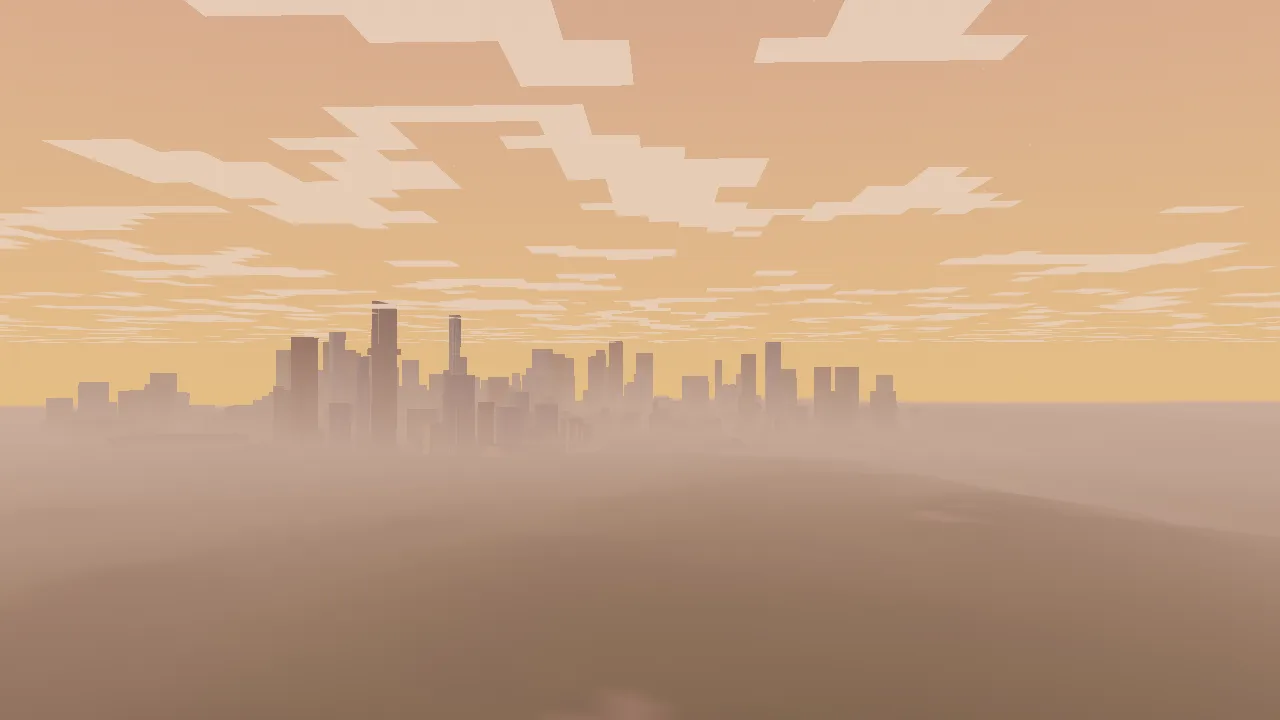
The streets used to stream in around you and stop 256 metres out, with bare hills beyond. Now 1,928 buildings of far massing hold the skyline all the way to the horizon, and at night their windows are the near city's own lamps baked down, so nothing shimmers or rearranges as you approach and the real streets fade in over their stand-ins.
Farms, 35 kilometres east
The Yarra Valley at Yering and Coldstream: paddocks of four to seventeen hectares behind wavy fence lines, tramlines through the crops, pasture in three states of being eaten, and farmsteads with the red barn, the silo and the windmill. The real land-use data sits underneath, so the orchards are where the orchards are.
Saves, sights and small mercies
Checkpoints: one click marks the world, one click rolls it back, which matters because the game saves when you quit no matter what you just blew up. Going a bit crazy is survivable now. Also new: E opens everything, holding right mouse aims down the sights, and factory reset restores the city to a pristine committed copy of itself.
Still to come
Not in the box
yet.
The download holds everything up to the workshop notes. Everything here is further out again, and we would rather say so than let you find out.
- A fifth public build. Everything in the workshop notes above is real and running today, and none of it is in the download yet. Wrapping it into a build is the next job.
- Dinosaurs. The zombies went first, which the dinosaurs should treat as a warning.
- Trams that move. The trains beat them to it; the tram tracks and their overhead wire keep waiting on Swanston Street.
- More cities. Melbourne taught us the whole pipeline, from map data to traffic to street light, and it is written down as a recipe we intend to run again.
- The nuke is still ungated. It costs nothing and rations itself on the honour system, which is to say not at all.
- A version number. Four builds have shipped and every one of them is known by its date, which stops being charming shortly.
- Mac and Linux, if Animal Crossfire finds its people. We have at least written down the three ways a Mac build could happen.
Fair questions
Is it really free?
Yes. No ads, no account, no telemetry, nothing to unlock. If you enjoy it, tell a friend. That is the whole business model.
Why is the download so big?
This one is 526 MB, up from 454 MB last time. The new weight is furnished rooms, street lamps, the city's map tiles, and the real landscape that now runs to the horizon around it. Most of the growth, as ever, is art and audio rather than code.
Why a voxel world?
Because we love them. Blocky worlds are honest about what they are, endlessly buildable, and fast enough to fill with animals and weather. The block surfaces are real photographic scans, released under a public-domain licence and baked down by us.
Do I need anything else installed?
Only for video. Recording on F9 hands its frames to ffmpeg, which we do not bundle, so if you have not installed it the game says so and carries on. Everything else runs out of the folder.
Mac or Linux?
Windows only for now. If Animal Crossfire finds its people, other platforms are on the table.
Where do my worlds live?
Under your Windows profile, at %LOCALAPPDATA%\PaxCraft. They sit outside the game folder, so you can move or delete the game itself without losing a single block.